
The short answer
- Gong is the call recorder most teams have heard of, and among the most expensive tools a sales team can buy.
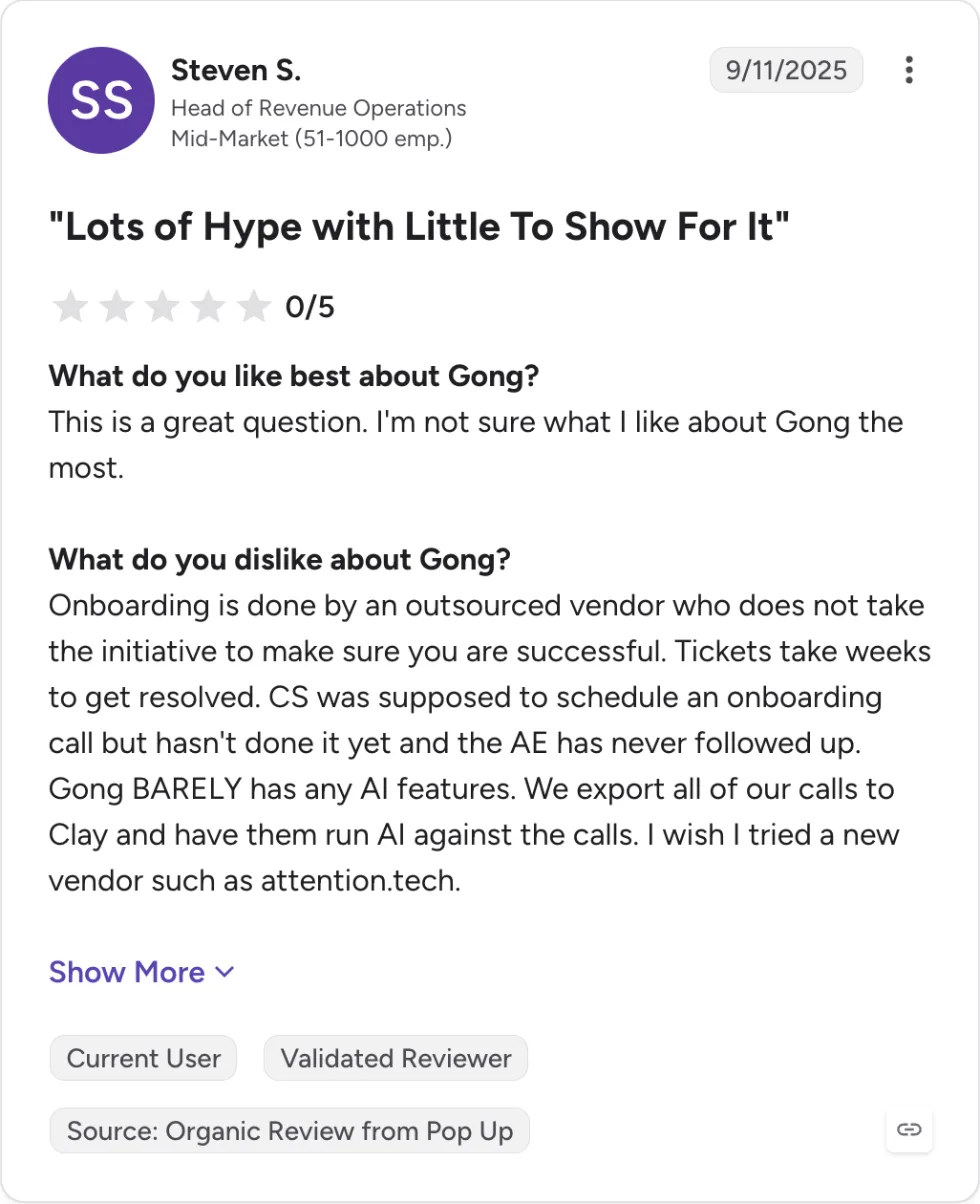
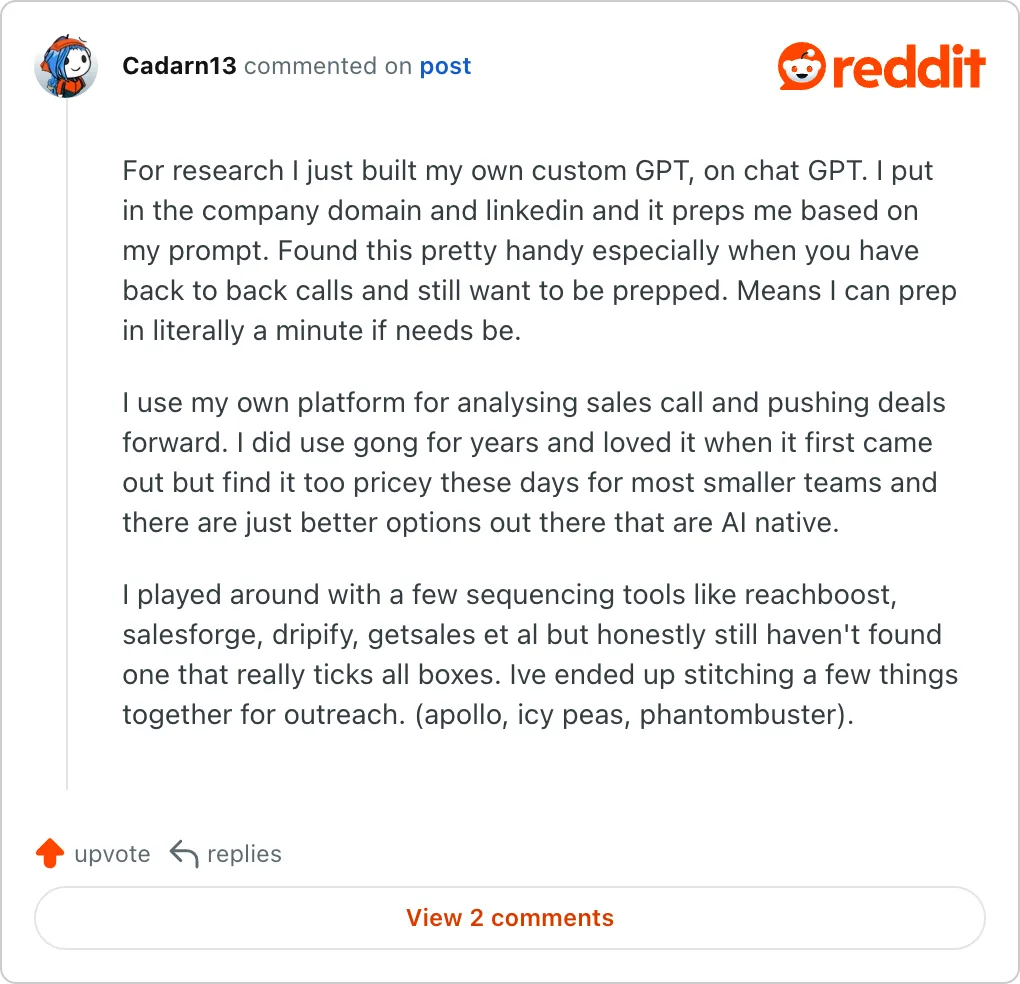
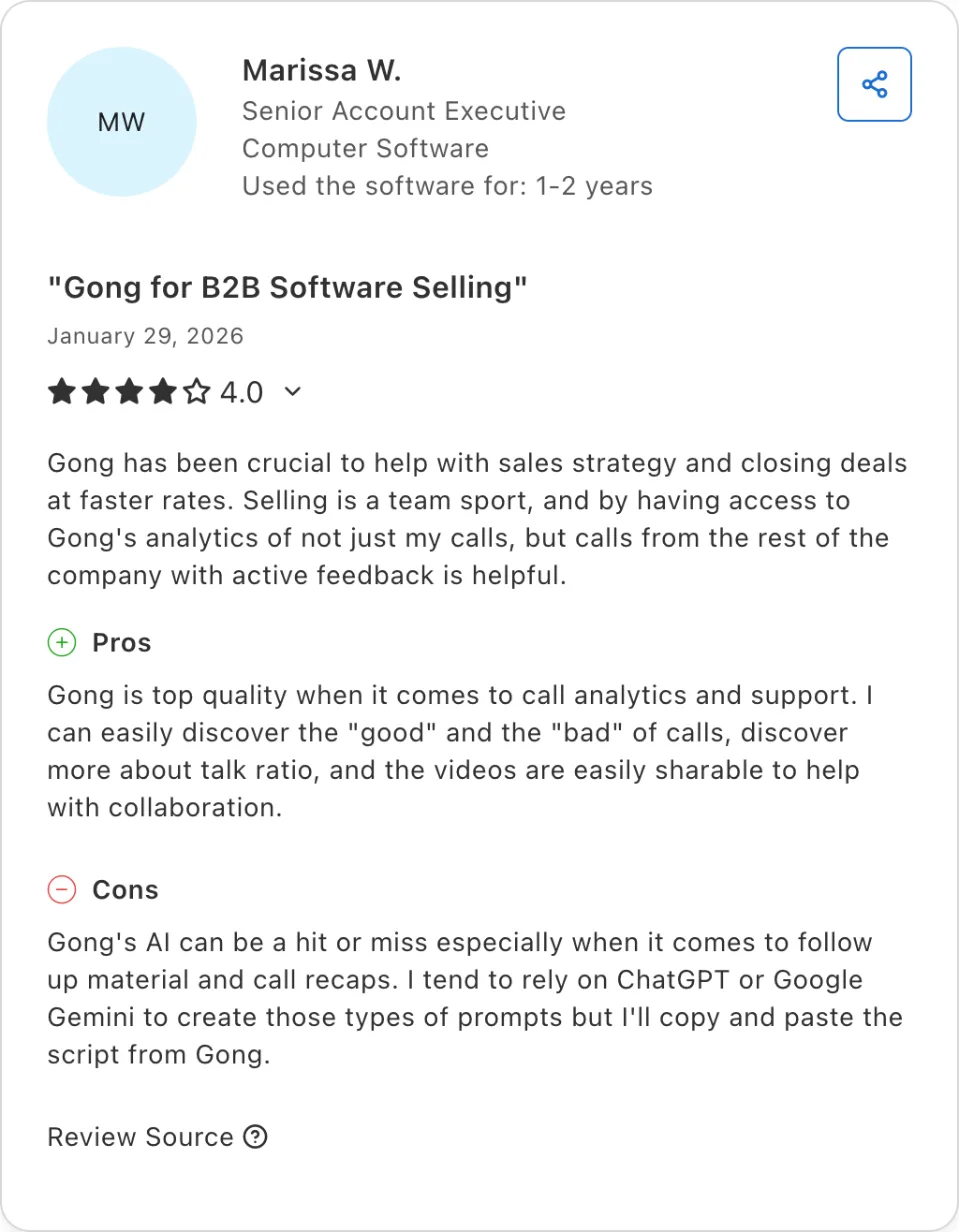
- It was built in 2015 to record and analyze calls for people to review. The AI came later, on top. Some of its own customers now paste Gong transcripts into ChatGPT or Claude to get the work done.
- Bigmind was built for agents from the start. The call updates the deal, your framework and your CRM, and the follow-up and tasks are written before anyone asks. Every seat is free.
The name everyone knows
Gong made call recording something a sales leader would pay for. For many teams it is still the default choice.
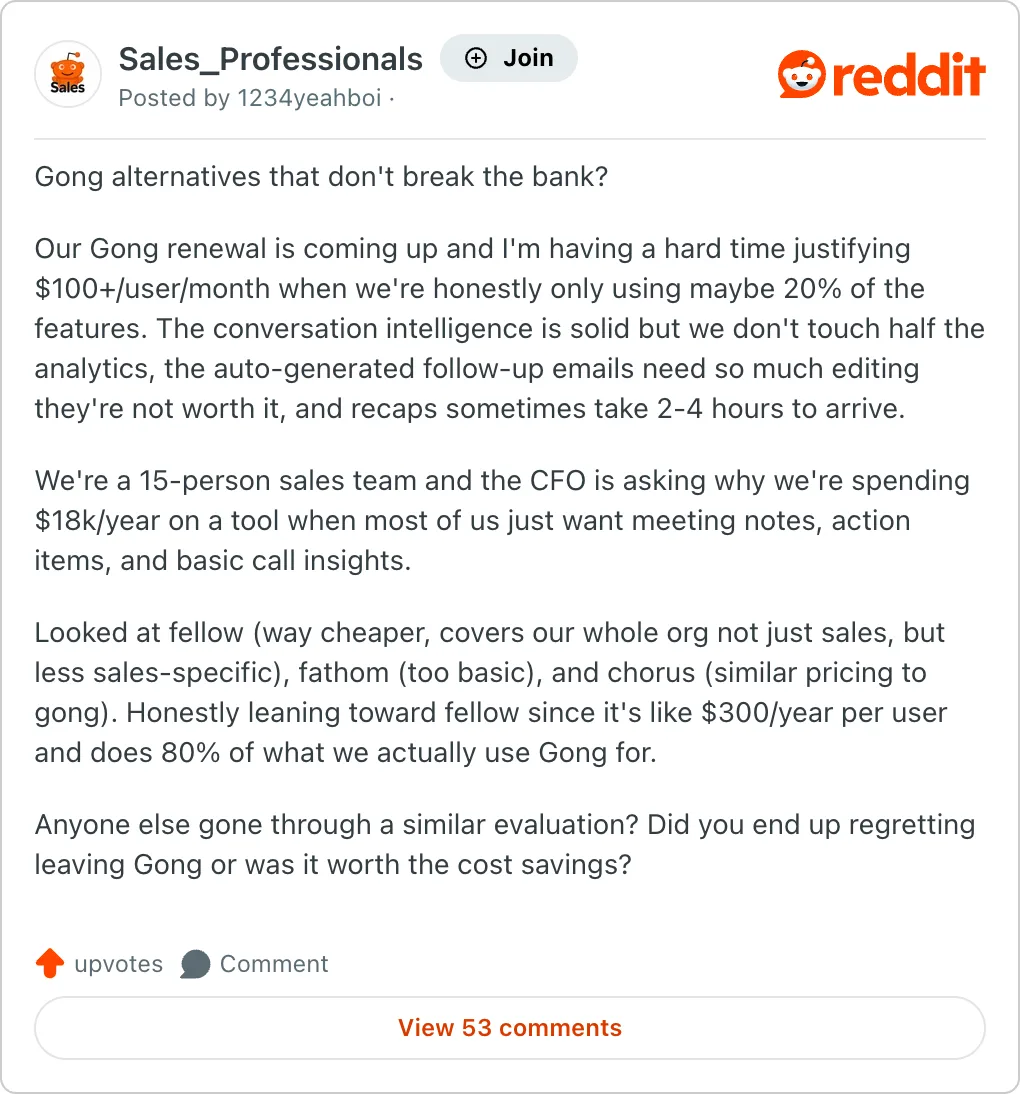
That reputation has a price. Gong does not publish what it charges, and the numbers buyers report are high. A seat runs roughly $1,300 to $3,000 a year by third-party estimates, on top of a platform fee of $5,000 to $50,000 a year. One Gong customer told us they pay more than $100,000 a year for 30 seats.
For a decade, that bought the best call recorder on the market. The question in 2026 is whether a call recorder is still the thing to buy.
Built for a different moment
Gong was designed for a world where people did the work. It records the call, transcribes it and turns it into dashboards, so a manager can review calls and a rep can find the moment a buyer raised a concern. Then a person writes the follow-up, updates the CRM and remembers what was promised.
Language models changed what a call can produce. A transcript is now enough for software to draft the follow-up, fill in the qualification, flag the risk and assign the next step. Gong has added AI features over time, and in 2026 an MCP server with three read-only tools for asking questions of your calls, available to paid seats. The product underneath is still built around recording and review.
What Gong customers say
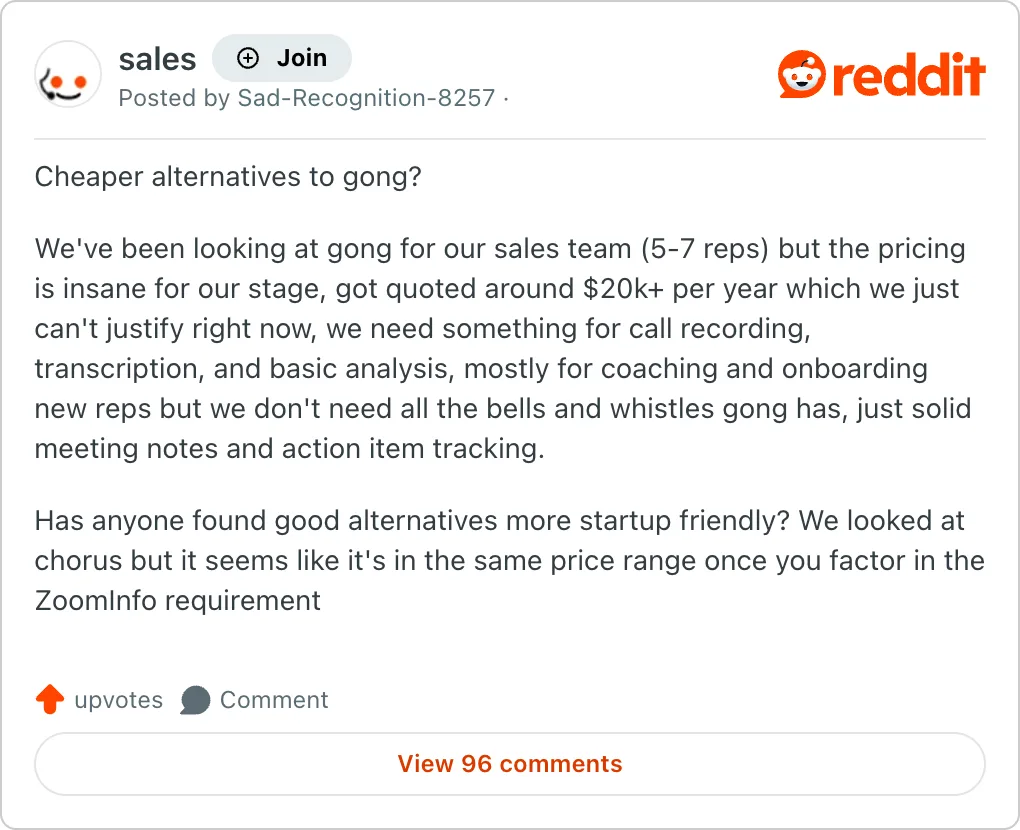
We read what Gong's own customers write about it on Reddit, G2 and Capterra. Two themes come up again and again: the price, and AI work that happens somewhere else. The most telling is what people do instead of using the AI they pay for:
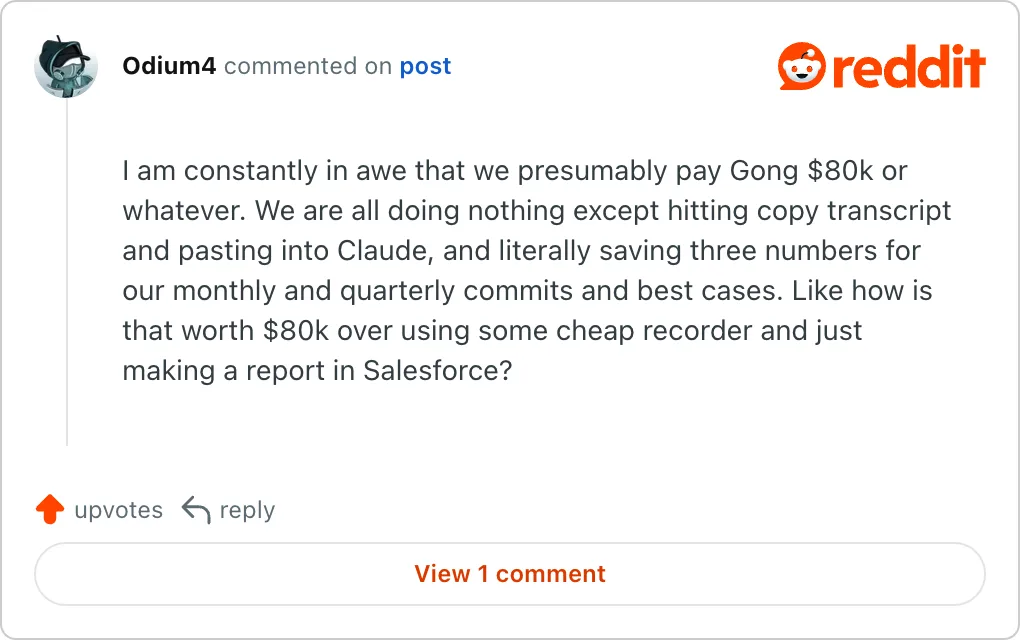
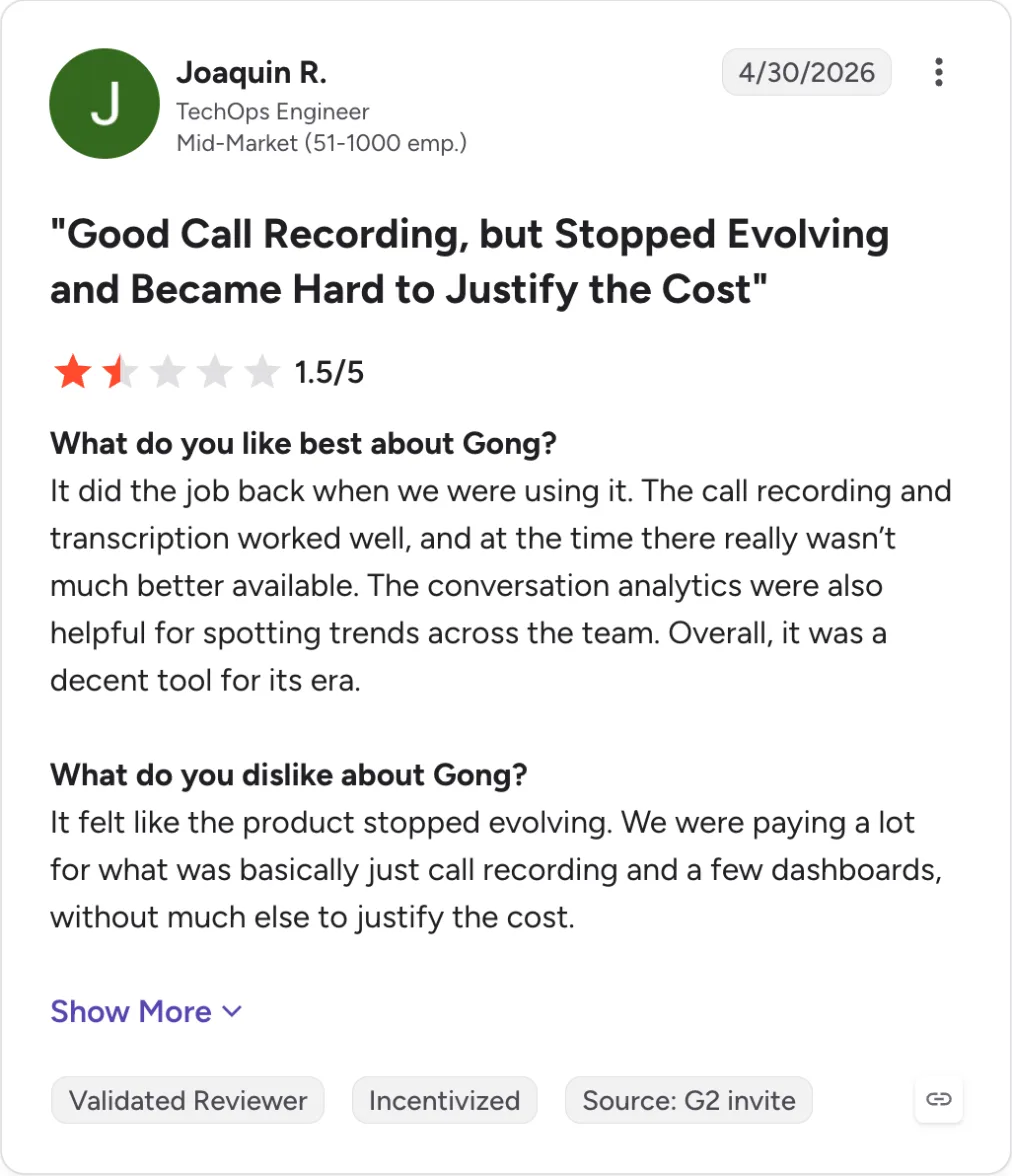
Longtime users describe a product that was right for its time:
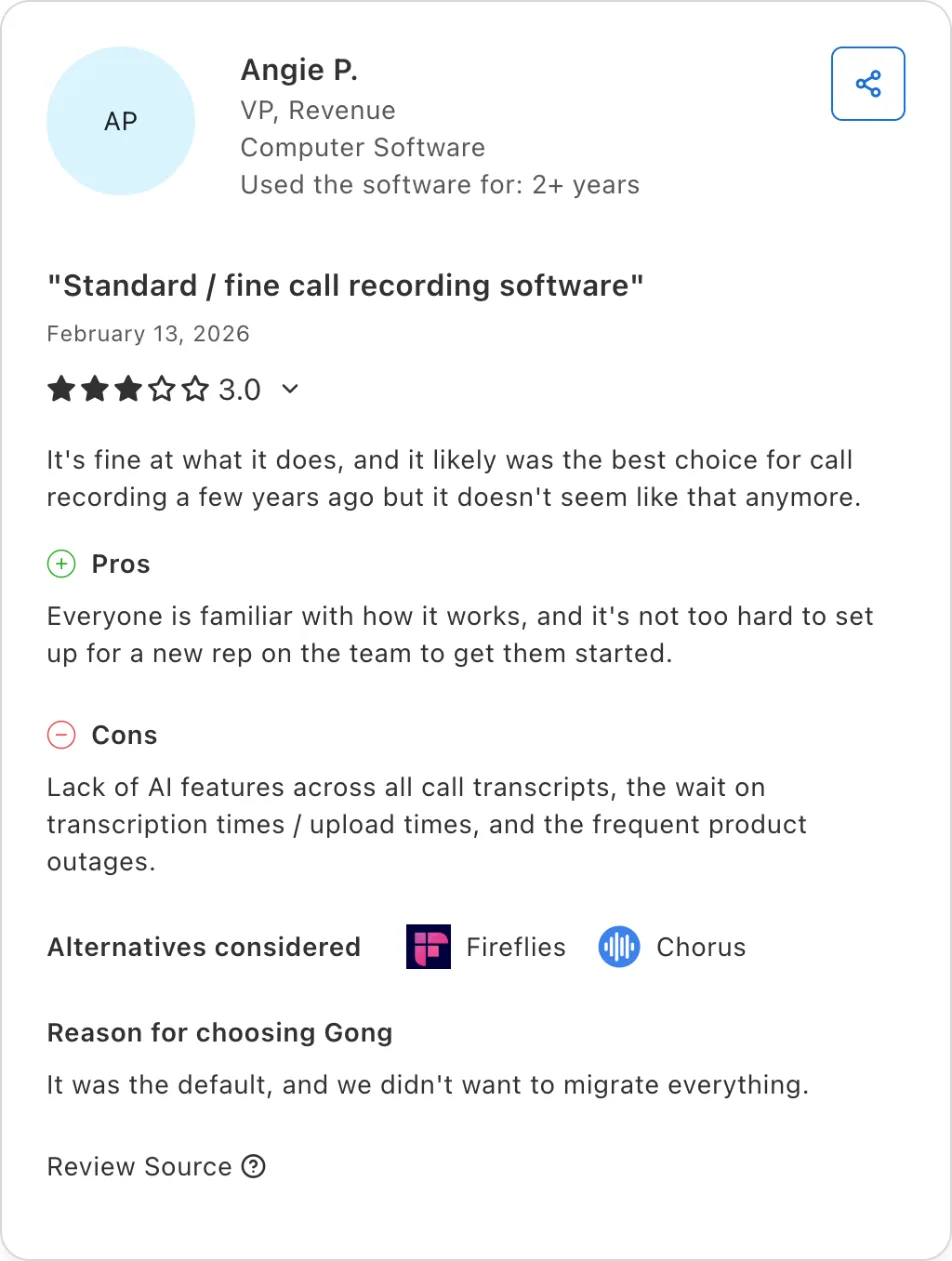
There are eight reviews in all, filterable by theme, at the end of this page.
When the AI work happens in another tab, you are paying for a recorder.
At a glance
| Bigmind | Gong | |
|---|---|---|
| Built for | Agents doing the work a call creates | People reviewing recorded calls |
| Meeting capture | Google Meet and Microsoft Teams by bot or with no bot, in-person meetings on Mac, uploaded files, Aircall | Zoom, Google Meet, Microsoft Teams, Webex and dialers |
| After the call | Follow-up drafted against your playbook, deal and CRM updated, commitments turned into tasks | Recording, transcript, summary and analytics |
| Qualification | Your framework, re-assessed from every call, email and CRM change, with the evidence cited | Deal boards and AI deal insights |
| AI outside the app | 75 tools by default, reading and writing, on every seat | Three read-only tools, for paid seats |
| Pricing | By customers tracked, from €7,200 a year, unlimited free seats | Not published, per seat plus a platform fee |
Where Gong is still strong
Call analytics at scale. Talk ratios, topic trends and win-loss patterns across thousands of calls. If reviewing calls is the whole job, it covers that.
The safe choice. One of the reviewers above chose Gong over Fireflies and Chorus for a simple reason: it was the default, and nobody wanted to migrate.
Zoom. Gong records on Zoom. Bigmind does not yet, which matters if most of your calls run there.
What Bigmind does instead
The work is done when the call ends
When a call ends in Bigmind, the summary is on the deal, the follow-up is drafted against your playbook and every commitment is a task in the Inbox of the person who made it. The rep reads the follow-up, changes what they want and sends it. Nobody pastes a transcript anywhere.

Hi Marta,
Thanks for today, and good to hear Corvane is out. One thing I didn't ask: could we get Rebecca on a call before we talk pricing? I'll bring the ramp numbers from your pilot team.
Does next week work for her?
Best, Jonas
Your framework fills itself from the evidence
Choose MEDDPICC, SPICED or your own. Bigmind assesses each deal against it whenever something new arrives: a call, an email, a signal, a CRM change. Every field carries its reasoning and links to the meeting where it was said. When a deal turns, the owner sees a warning with the reason and a date to check it again.


The record holds more than the recording
Most of a deal happens between calls, in email threads, calendar invites and CRM updates. Bigmind keeps all of it on the account, so the same record serves sales before the close and customer success after it. One of our customers retired their call recorder for exactly this reason.
Your agents get the whole product
Through MCP, anyone on your team can work from Claude, ChatGPT, Codex or Cursor with the same reach they have in the app: prepare a call, review a pipeline, update a deal, configure a framework. It comes with every seat, free ones included.
Their MCP, tool by tool
Every revenue tool now says it has an MCP server. What matters is what the tools let an agent do.
Gong documents three tools:
- Ask account. Questions about a single account.
- Ask deal. Questions about a single deal.
- Generate brief. A summary of themes, stakeholders, risks and next steps.
In Gong's own words, "the integration is read-only", and "AI tools cannot create, update, or delete any data in Gong". Private calls are left out. Each person needs a paid Gong seat, collaborator accounts cannot connect, and a Gong admin sets up a separate integration for every AI tool.
Bigmind turns on 75 tools by default for every person, free seats included, and an admin can switch on 16 more groups. Across them, an agent can:
- Read the calls. Search every meeting your team has had and open any transcript.
- Read the deals. See where each deal stands against your framework, and which warnings are open.
- Do the work after a call. Create tasks, draft the follow-up email and add notes to the deal.
- Set Bigmind up. Change your qualification framework and the signals you watch for, from Claude.
- Update the CRM, with your approval. Changes to a deal's stage, amount or close date come back as a card to approve first.
What it costs
| Bigmind | Gong | |
|---|---|---|
| Priced by | Customers tracked | Seats, plus a platform fee |
| Seats | Unlimited and free; Pro at €20 a month per person | Roughly $1,300 to $3,000 a year each, by third-party estimates |
| Platform fee | None | Roughly $5,000 to $50,000 a year |
| Published | Yes | No |
| Trial | 14 days, no sales call needed | Through sales |
Bigmind starts at €7,200 a year for 1,000 tracked customers, prospects and existing customers alike. Product, marketing and customer success can read every call without a license.
Which to choose
Choose Gong if reviewing calls at scale is the job, most of your calls are on Zoom, and the budget is already there.
Choose Bigmind if you would rather the call did the work: the deal, the CRM, the follow-up and the tasks, handled by agents, for the whole team, at a fraction of the cost.
Moving from Gong
Bigmind imports your Gong conversations with their transcripts and recordings, so your history comes with you. Connect Salesforce or HubSpot, your email and your calendar, and each account's record is built from what is already there. Scorecards and frameworks start from templates and are edited to your own definitions.
If your Gong renewal is coming up, book a demo and we will run Bigmind on your own accounts before you sign. Or start a free trial.
We wrote this from Gong's public pages and help center, and from reviews on Reddit, G2 and Capterra, read on October 27, 2026. Gong's prices are third-party estimates because Gong does not publish them. If something here is out of date, tell us and we will correct it.